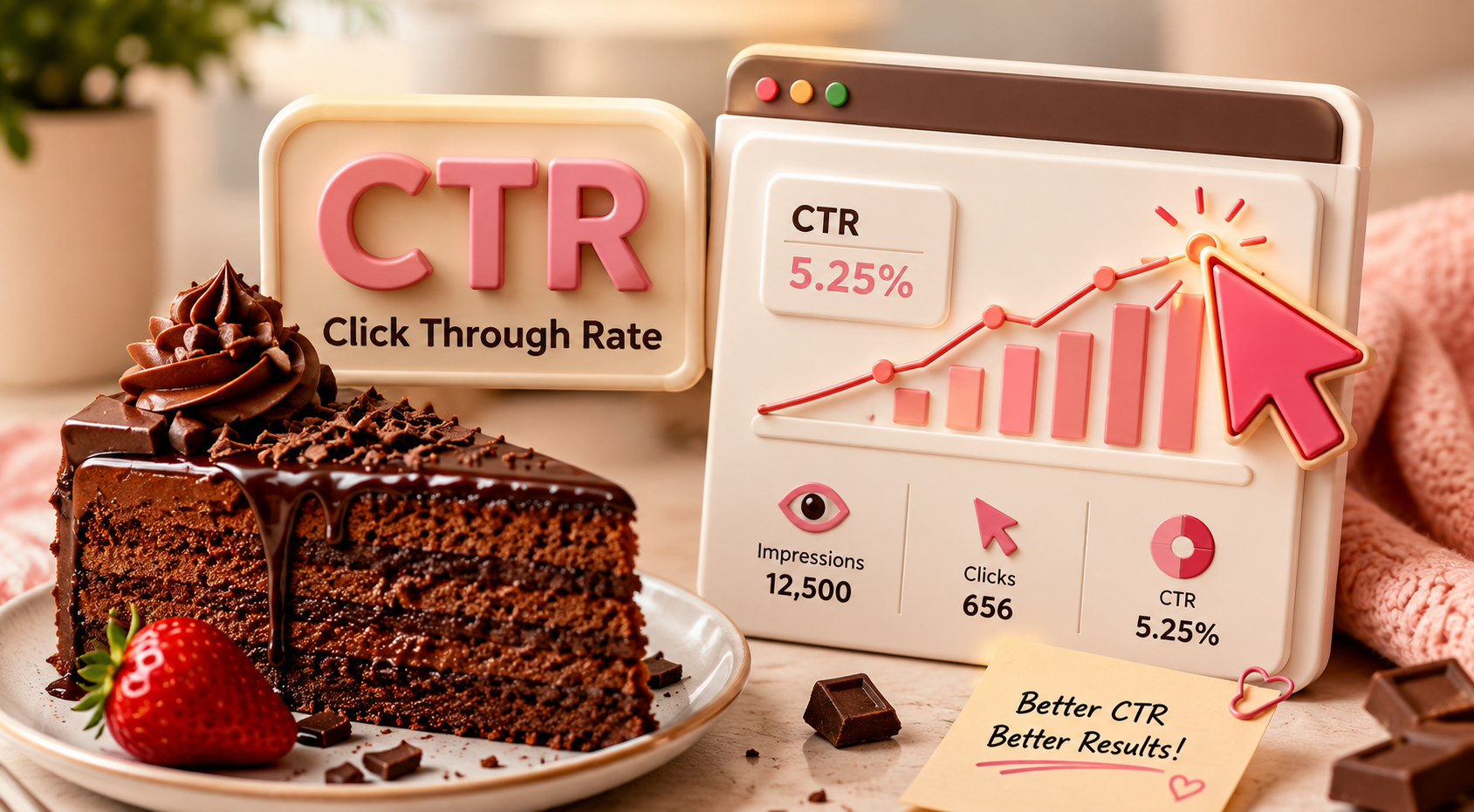
Your Complete Guide to Understanding CTR, How to Calculate It, and the Best Ways to Improve It
Introduction
In the world of digital marketing, it is not enough for your ad to be shown to thousands of users. What matters more is how many people actually interact with it. This is where CTR (Click-Through Rate) comes in. CTR is one of the most important performance metrics used to measure how appealing and effective ads and links are at capturing the audience’s attention.
In this guide, we will explore what CTR is, how it is calculated, and why it is an important metric for evaluating campaign performance. We will also cover the best ways to improve CTR and achieve better results in digital marketing.
?What Is CTR (Click-Through Rate)
CTR, or Click-Through Rate, is a digital marketing metric used to measure the percentage of users who click on an ad or link compared with the number of times it is shown to them. This metric helps marketers understand how effectively an ad or piece of content captures the audience’s attention and encourages them to interact with it.
CTR is an important Key Performance Indicator (KPI) that marketers use to evaluate the appeal of ads and content and how relevant they are to the target audience. A high click-through rate may indicate that an ad, headline, or Call to Action (CTA) successfully captures users’ attention and encourages them to click. On the other hand, a low CTR may indicate a need to review the content, targeting, or the way the ad is presented.
CTR is used across various digital marketing channels, including:
- Google Ads.
- Social media advertising.
- Email marketing campaigns.
- Organic Search results.
In general, a high CTR alone does not necessarily mean that a marketing campaign is successful. However, it is an important indicator of how effectively an ad or piece of content attracts clicks. Therefore, CTR should be analyzed alongside other performance metrics, such as CPC (Cost Per Click), Conversion Rate, and ROAS (Return on Ad Spend), to gain a more comprehensive evaluation of campaign performance.
?What Does Click-Through Rate (CTR) Mean
Click-Through Rate (CTR) refers to the percentage of users who clicked on an ad, link, or search result after seeing it. This metric is used to evaluate how effectively content or an advertisement captures the audience’s attention and encourages them to take action.
For example, if your ad is shown to 10,000 users and receives 300 clicks, the Click-Through Rate (CTR) is 3%. In general, the higher the CTR, the more likely it is that the ad, headline, or Call to Action (CTA) is appealing and relevant to the target audience.
CTR is an important performance metric in digital marketing because it helps marketers measure and improve campaign effectiveness by understanding user behavior and how they interact with content. However, CTR should not be used alone to evaluate campaign success. It is best analyzed alongside other metrics, such as CPC, Conversion Rate, and ROAS, to gain a more comprehensive view of overall performance.
?How Is CTR Calculated
Click-Through Rate (CTR) is calculated by dividing the number of clicks by the number of impressions, then multiplying the result by 100 to get the percentage.
CTR Formula:
CTR = (Number of Clicks ÷ Number of Impressions) × 100
For example, if your ad receives 5,000 impressions and gets 250 clicks, the calculation would be:
CTR = (250 ÷ 5,000) × 100 = 5%
This means that 5% of the people who viewed the ad clicked on it.
Calculating CTR helps marketers evaluate how effectively ads, headlines, and links attract audience attention. A higher click-through rate generally indicates that an ad or piece of content is more appealing and relevant to the target audience. However, this metric should be analyzed alongside other metrics, such as CPC and Conversion Rate, to gain a comprehensive evaluation of campaign performance.
Metrics Related to CTR
After understanding how CTR is calculated, it is important to know that it is not the only metric used to measure advertising campaign performance. If you want to understand the cost of each click on your ad, you can read our article on CPC (Cost Per Click). If you want to learn about the cost of one thousand impressions, you can explore our article on CPM (Cost Per Mille). If your goal is to measure the return generated from your advertising spend, you can read our article on ROAS (Return on Ad Spend).
Why Is CTR Important in Digital Marketing?
CTR (Click-Through Rate) is one of the most important performance metrics in digital marketing because it helps measure how effectively advertising content captures the audience’s attention and encourages users to interact with it rather than simply view it.
First, CTR helps marketers evaluate the effectiveness of an ad. A high click-through rate may indicate that the advertising message, headline, or Call to Action (CTA) is engaging and relevant to the target audience, while a low CTR may indicate a need to review the content, targeting, or the way the ad is presented.
Second, CTR helps improve advertising performance continuously. Marketers can compare different versions of an ad through A/B Testing to determine which version achieves better click-through rates and audience engagement.
Third, CTR provides valuable insights into campaign efficiency. A higher click-through rate can increase the number of visits generated from the same number of impressions, which may increase the chances of generating Conversions, particularly when the targeting, offer, and landing page are relevant to the audience. However, CTR should be analyzed alongside other metrics, such as CPC, Conversion Rate, and ROAS, to gain a more comprehensive evaluation of campaign performance.
Finally, in certain digital marketing activities, such as content-based advertising and influencer marketing campaigns, CTR helps measure how effectively content turns views or impressions into actual visits. This provides marketers with valuable data to make more accurate and effective marketing decisions.
What Is a Good CTR?
A good CTR (Click-Through Rate) varies depending on the industry, advertising platform, and campaign type, so there is no single benchmark that applies to everyone. However, general benchmarks can be used as a reference for evaluation.
In general:
- Less than 1%: Low and may indicate a need to improve the ad or targeting.
- 1% to 3%: Average and considered acceptable for many campaigns.
- 3% to 5%: Good and may indicate an effective ad.
- More than 5%: Excellent and may indicate strong content and precise targeting.
However, it is important to note that these rates vary depending on the channel:
- For Google Search Ads, CTR is often higher because users are actively searching for something specific.
- For social media advertising, CTR may be lower because users are not necessarily in an active search mindset.
- For influencer campaigns, CTR can vary depending on the strength of the content and the level of trust the audience has in the influencer.
Therefore, the most important factor is not the number alone, but comparing CTR with previous campaign results and gradually improving it over time.
Factors That Affect CTR
CTR (Click-Through Rate) is influenced by several key factors that determine how effectively an ad captures the audience’s attention and encourages them to click. Understanding these factors can help marketers significantly improve campaign performance.
Ad content quality plays a major role. The more engaging and clear the ad copy is and the more value it provides to the audience, the more likely users are to click on it.
The headline is one of the most influential elements because it is one of the first things users see. Strong and direct headlines, especially those that address a specific problem or highlight a benefit, can significantly improve CTR.
Images and visual design can also influence CTR. Attractive visual elements help capture attention in crowded content environments, particularly on social media platforms.
Targeting accuracy is another important factor. The more precisely an ad is targeted to the right audience, the more likely users are to interact with and click on it.
A clear Call to Action (CTA), such as “Learn More” or “Shop Now,” can encourage users to take the next step. Without a clear CTA, the likelihood of receiving clicks may decrease.
The advertising platform also affects CTR. For example, search ads often achieve higher CTRs than social media browsing ads because users have different levels of purchase or search intent.
Trust in the brand or influencer can also play an important role in increasing engagement, particularly in campaigns that rely on influencer marketing.
How Can You Increase Click-Through Rate (CTR)?
Because CTA stands for Call to Action, it is one of the factors that can help improve CTR; it is not a synonym for CTR.
Content
Improving CTR is an important goal in many marketing campaigns because it reflects how effectively an ad or piece of content captures the audience’s attention and encourages users to click. Here are some of the most effective ways to increase CTR:
Write a Clear and Engaging Headline
The headline is one of the first things users see, so it should be concise, highlight the key benefit, and create curiosity without making exaggerated claims.
Use a Strong Call to Action (CTA)
Phrases such as “Start Now,” “Learn More,” or “Get the Offer” can encourage users to take the next step.
Improve Audience Targeting
Showing your ads to people who are genuinely interested in your product or service increases the likelihood of clicks and can improve overall campaign performance.
Use High-Quality Images and Visuals
Engaging visual elements can help your ad stand out from competing content, especially on social media platforms.
Test Multiple Ad Variations (A/B Testing)
Experiment with different headlines, images, and CTA buttons to identify which versions achieve the best CTR.
Ensure Ad-to-Landing-Page Relevance
When the message in the ad matches the content of the landing page, users are more likely to trust the offer and continue engaging with the page.
CTR vs. Impressions: What Is the Difference?
Although CTR (Click-Through Rate) and Impressions are both used to measure advertising campaign performance, each metric measures a different aspect of campaign performance.
CTR Impressions Measures the percentage of clicks compared with the number of times the ad was shown. Measures the total number of times an ad was displayed to users, whether or not they clicked on it. Used to evaluate how effectively an ad attracts clicks and encourages engagement. Used to measure the reach and visibility of an ad. Calculated using the formula: (Clicks ÷ Impressions) × 100. Represents the number of times an ad was displayed and does not require a calculation. A higher CTR may indicate that an ad is more effective at generating clicks. A high number of impressions does not necessarily mean the ad is generating engagement or clicks.Simple Example
If your ad is shown 10,000 times (Impressions) and receives 300 clicks, then:
Impressions = 10,000
Clicks = 300
CTR = (300 ÷ 10,000) × 100 = 3%
Best Tools for Measuring and Analyzing CTR
Performance analytics tools help marketers monitor Click-Through Rate (CTR), analyze campaign results, and make data-driven decisions. The right tool depends on the marketing channel being used, whether it is search engines, social media, or email marketing.
1. Google Ads
Google Ads is one of the most useful tools for measuring CTR in search and display advertising campaigns. It provides data on Impressions, Clicks, and CTR, along with reports that can help marketers improve ad performance.
2. Google Analytics 4 (GA4)
Google Analytics 4 (GA4) provides advanced insights into user behavior after they click on an ad. This helps marketers understand whether clicks lead to engagement or Conversions.
3. Google Search Console
If you want to analyze CTR for Organic Search results, Google Search Console provides data on impressions, clicks, and average CTR for individual pages and search queries.
4. Meta Ads Manager
Meta Ads Manager allows marketers to track CTR for Facebook and Instagram campaigns, as well as analyze ad performance and compare results across different audiences.
5. LinkedIn Campaign Manager
If you are targeting businesses or professionals, LinkedIn Campaign Manager provides detailed reports on CTR and campaign performance across the LinkedIn platform.
6. Email Marketing Tools
Platforms such as Mailchimp and Brevo provide reports showing the click rate for links within email campaigns. These insights can help marketers optimize email campaigns and increase engagement.
Common Mistakes That Affect CTR
A low Click-Through Rate (CTR) can result from several mistakes that reduce an ad’s appeal or prevent it from reaching the right audience. Identifying and avoiding these mistakes can help improve marketing campaign performance.
Targeting the Wrong Audience
Showing an ad to people who are not interested in the product or service can lead to a lower CTR.
Writing an Unappealing Headline
If the headline does not capture the user’s attention or clearly communicate the benefit, users are more likely to ignore the ad.
Using an Unclear Call to Action (CTA)
Failing to guide users toward the next step can reduce the likelihood of clicks.
Using Low-Quality Images or Designs
Weak or unattractive visual elements can make an ad less attention-grabbing, especially on social media platforms.
Lack of Alignment Between the Ad and Landing Page
When users do not find what the ad promised on the landing page, their trust may decrease, which can negatively affect campaign performance.
Failing to Test and Optimize Ads
Using only one version of an ad without conducting A/B Testing can result in missed opportunities to improve CTR.
Focusing Only on Impressions
A high number of Impressions does not necessarily mean that an ad is successful if its CTR is low. Therefore, both metrics should be analyzed together to gain a more accurate understanding of campaign performance.
Conclusion
CTR (Click-Through Rate) is one of the most important performance metrics in digital marketing because it helps measure how effectively ads and content capture the audience’s attention and encourage users to take action. By monitoring and analyzing CTR, marketers can improve targeting, refine advertising messages, increase campaign effectiveness, and achieve better marketing results.
However, CTR should not be used alone when evaluating campaign performance. It is best analyzed alongside other metrics, such as CPC, CPM, CPA, ROAS, and Conversion Rate, to gain a comprehensive view of campaign performance, make more informed marketing decisions, and achieve a better return on investment.